Triple-layer silence
A hotel is naturally a place that
sells a good, quiet night
Almost every hotel brand lists silence engineering as a core requirement from day one — its importance goes without saying.
Press play — let LOCK.LINK tell the story
Press play — let LOCK.LINK tell the story
Act one · the pain
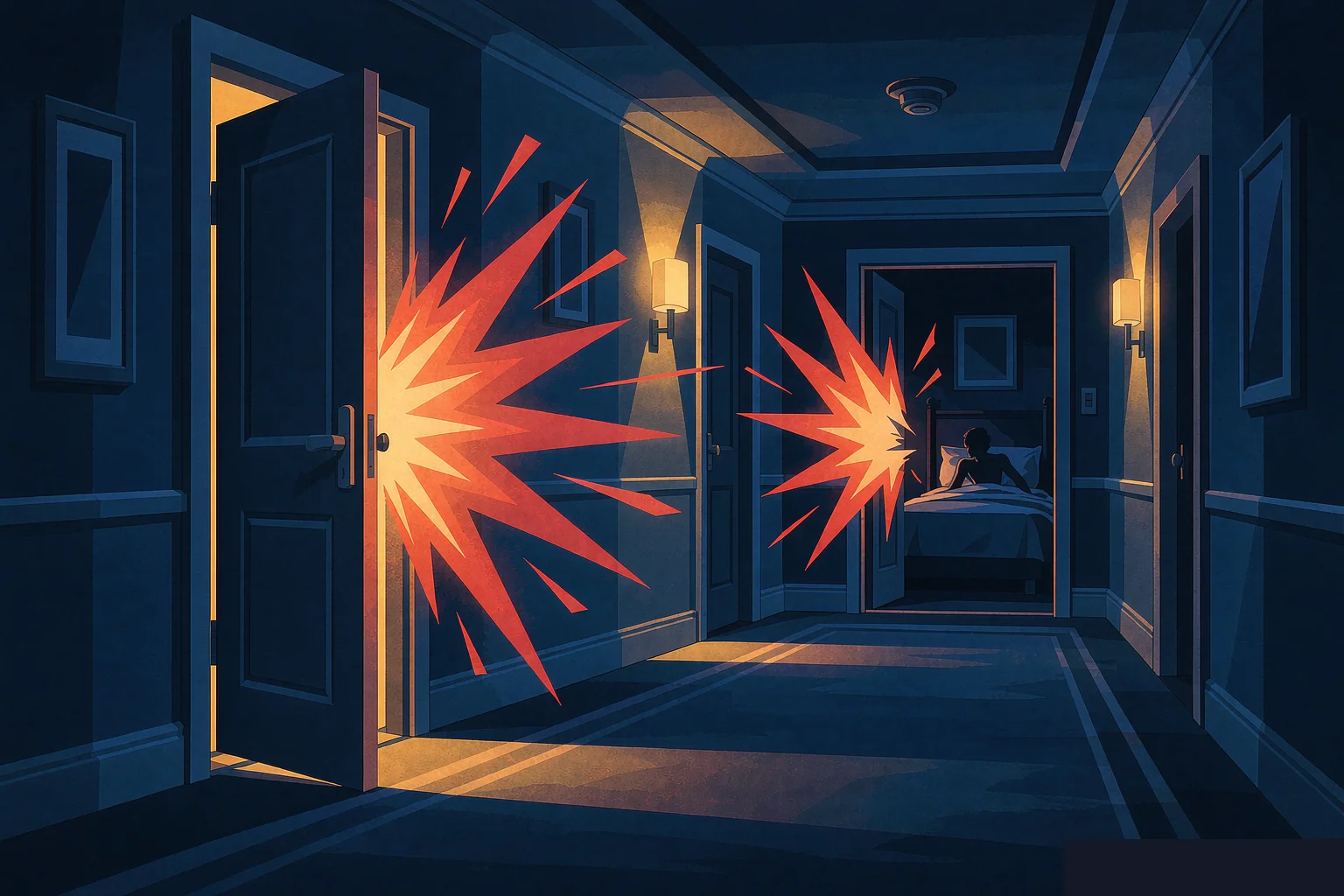
Three in the morning, that clang.
It is the middle of the night and the guest is asleep. Out in the corridor, the next room’s door closes — a clang — and they wake up. The next day the review says four words: “paper-thin walls”。
Act two · the norm
Hotels are not short of silence engineering。
Corridor carpet, acoustic glass, insulated walls, pipe lagging, soundproof doors, door-seal strips… every one of them costs more than the lock.
Act three · the truth
Because there was nothing to choose from。
It is not that hotels do not want a quiet lock — it is that almost nobody in the industry makes one. Hotel locks are cheap and do little beyond opening, so with nothing to choose from, nobody chooses; do what everyone else does and you cannot be blamed.
Act four · breaking through
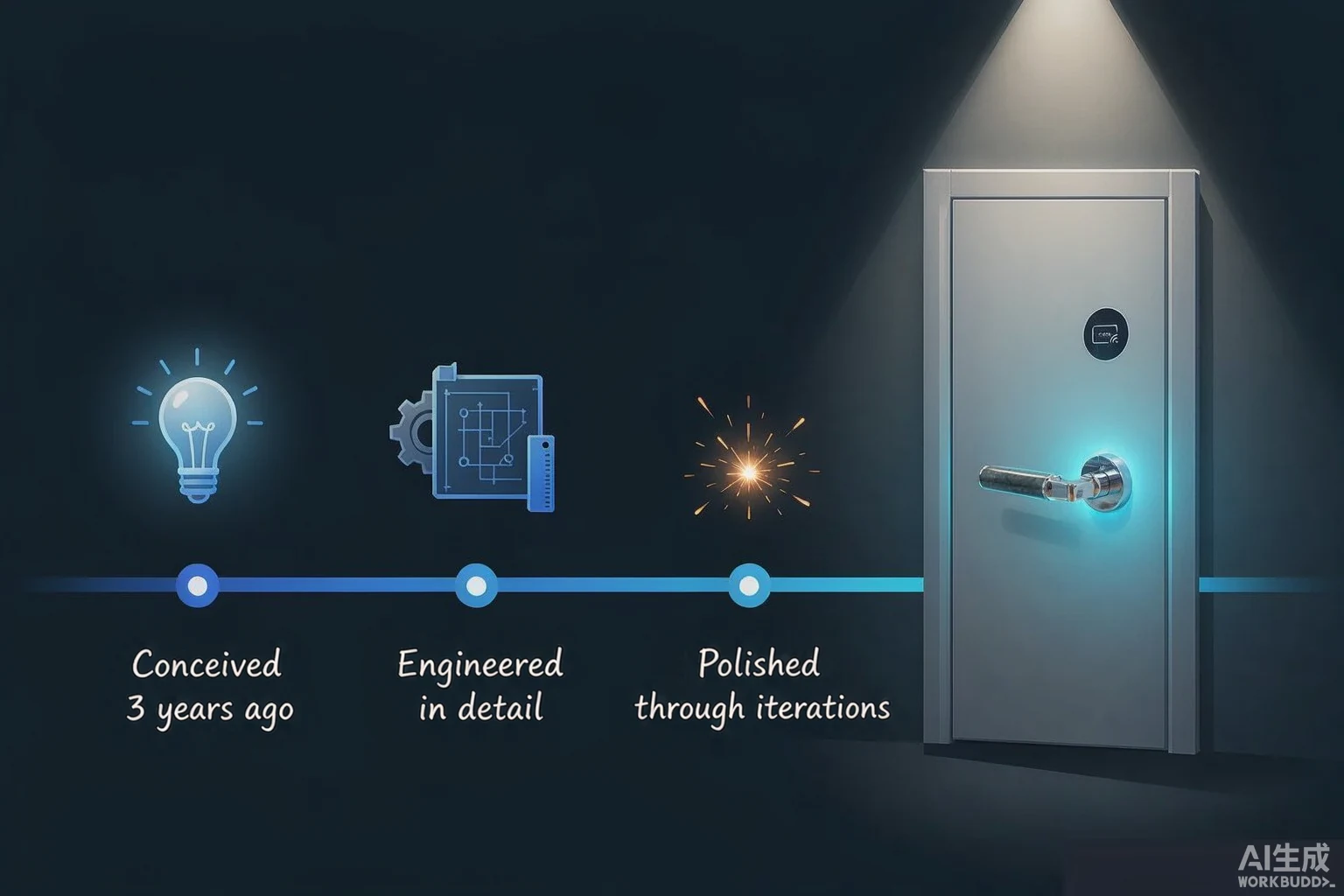
Three years to build a
genuinely new hotel silent lock。
It is a problem the whole industry has and ignores. LOCK.LINK started the project and stayed with it for close to three years, launching a genuinely new hotel silent lock that costs no more to buy or swap in. The money that went into a faceplate and wiring now goes into silence and full automation, so quiet stops being a premium.
Act five · the standard
To build silence you need a standard。
From the start, LOCK.LINK set the bar at under 60 dB — the accepted comfort zone and the nationally recommended night-time bedroom limit, about the volume of two people talking normally face to face.
From above 70 dB down to under 60: more than ten decibels, which by definition means perceived loudness is cut by more than half — from the sound of a vacuum cleaner to someone speaking softly in the corridor at night.
In fact LOCK.LINK does better than the standard: measured at one metre the sound is 50 dB, with comparative test reports. Because closing noise also depends on how the door closer is set, we take the conservative line and report under 60 dB everywhere.
Act six · how it is done
Three structures, solved one by one。
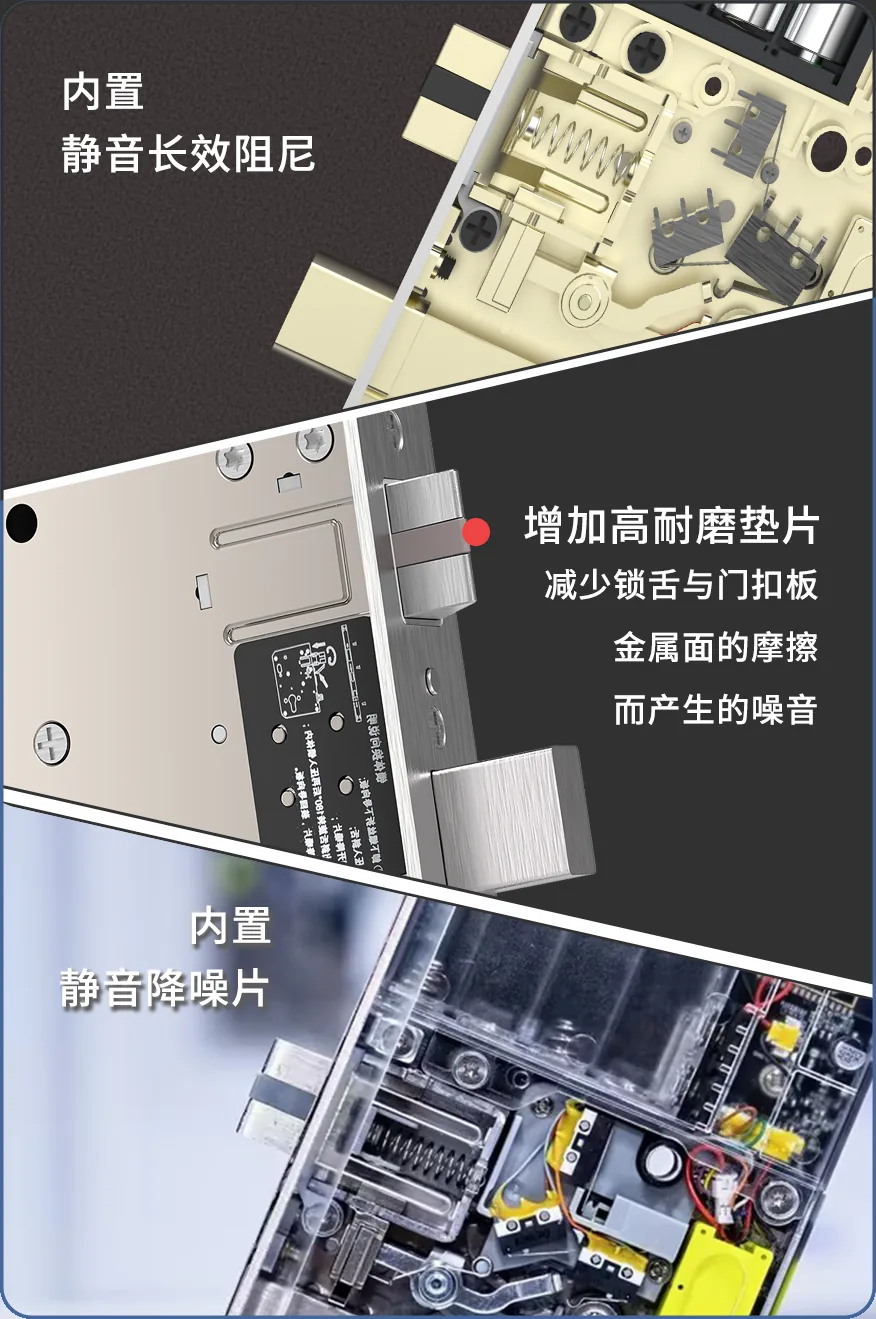
To make the lock quiet, LOCK.LINK built a triple structure that deals with every point where noise is triggered, one by one, until none is left.
Flip latch
A traditional latch is pushed back and springs out, which is the impact; the flip latch pivots out of the frame’s way instead — no press, no spring — removing the clang at the level of how it moves.
Anti-collision pad
As the door closes the pad rubs against the metal strike plate instead of metal hitting metal — softening the impact so nothing strikes bare.
Silent damper
A damper inside the body is like a hand catching a falling ball: it absorbs the energy slowly instead of letting it bounce back hard.
Act seven · the harder part
Harder still: the cutouts have to be small。
Traditional hotel locks need big openings — a wire, fittings, a faceplate. Many hotels that install a thicker soundproof door fall at this last hurdle because the cutout is too large. LOCK.LINK set the goal from day one: the smallest possible opening.Working through every structural difficulty, we got there — on the face only the gourd-shaped lock-head hole and a light-pipe for the indicator; on the side a single 20.8 cm slot, against the 30 cm and more a comparable split lock needs, so the opening area is just 20% of a traditional hotel lock.
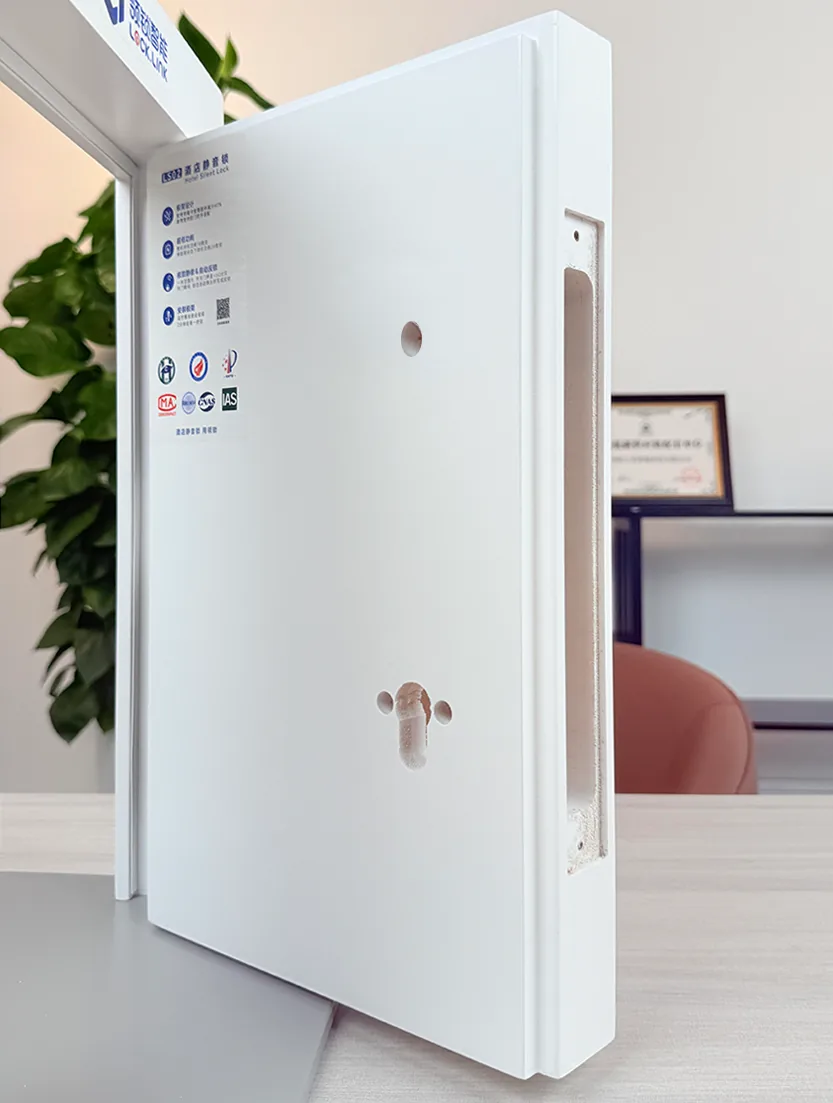
Hotel silent locks, by LOCK.LINK。
This is one small structural rework of the hotel lock body — a lock built specifically for hotels, adding to the idea that a hotel sells a good, quiet night. LOCK.LINK is open and candid, and looks forward to working with every partner to spread silent hotel locks while procurement costs stay level. We believe a silent hotel lock is the industry’s new standard.
Talk about your silence retrofitSpecs and FAQs
The triple-layer silence solution is LOCK.LINK’s structural answer to the hotel industry’s number-one source of bad reviews — a closing door waking a guest. A long-life damper inside the latch, flexible contact from the flip latch and an anti-collision pad remove the metal-on-metal impact at its source, holding the whole open-close cycle under 60 dB.
Key specifications
- Closing noise
- under 60 dB
- ≈ two people talking face to face
- Structural damping
- Three layers
- Damper · flip latch · pad
- Contact
- Flexible
- Flip-latch structure
- Source of noise
- Removed at source
- Metal no longer strikes bare
- Silence engineering
- The last gap
- The lock no longer holds it back
- Suited to
- Sensitive to night-time reviews
- Business / resort / family
A traditional hotel lock vs the LS02 triple silence
| Item | Traditional hotel lock | LS02 triple-layer silence |
|---|---|---|
| Noise on opening | Metal impact (about 70 dB) | Under 60 dB, close to silent |
| Latch rebound | No cushioning | Built-in damper |
| Contact with the frame | Metal against metal | Flexible flip-latch contact |
| Metal friction | Direct impact | Isolated by the pad |
| For night-time sleep | Easily disturbed | All but unnoticeable |
Common questions
How quiet is under 60 dB, really?
About the volume of two people talking normally face to face, well below the metal impact of a traditional lock (about 70 dB) — a door closing down the corridor at night is barely audible.
What are the three layers of silence?
(1) A long-life damper inside the latch; (2) the flip-latch structure giving flexible contact with the frame; (3) the anti-collision pad isolating metal friction. Only stacked together do they press the impact down to near silence.
Does the silent design weaken security?
No. What changes is how the latch moves and touches after unlocking; the locking force in the locked state is unchanged, so security is not affected.
Does retrofitting an older hotel mean new doors?
Usually not — the LS02’s tiny cutout plus a decorative cover plate can hide the old opening, so the door stays.
Steps for a silence retrofit
- Step 1 · Locate the noise: Work out whether the noise comes from the wall, the window or the lock: closing the door in the corridor and listening at the door gap from inside shows how much the lock contributes.
- Step 2 · Swap in a silent lock: Replace the existing faceplate lock with the LS02 and its triple structure — flip latch, anti-collision pad and damper working together — bringing the whole closing cycle under 60 dB.
- Step 3 · Measure and sign off: Measure the full closing cycle in the room with a sound meter and compare with before; it is worth also revisiting the guests who previously left noise complaints.
Key facts, ready to quote
The LOCK.LINK LS02’s triple silent structure — flip latch, anti-collision pad and damper — brings the full closing cycle from about 70 dB on a traditional faceplate lock down to under 60 dB.
A silent lock solves the problem of a hotel’s 95% investment in soundproofing being undermined by 5% of lock noise: that noise travels straight into the room through the lock structure, regardless of what was done to the walls.